
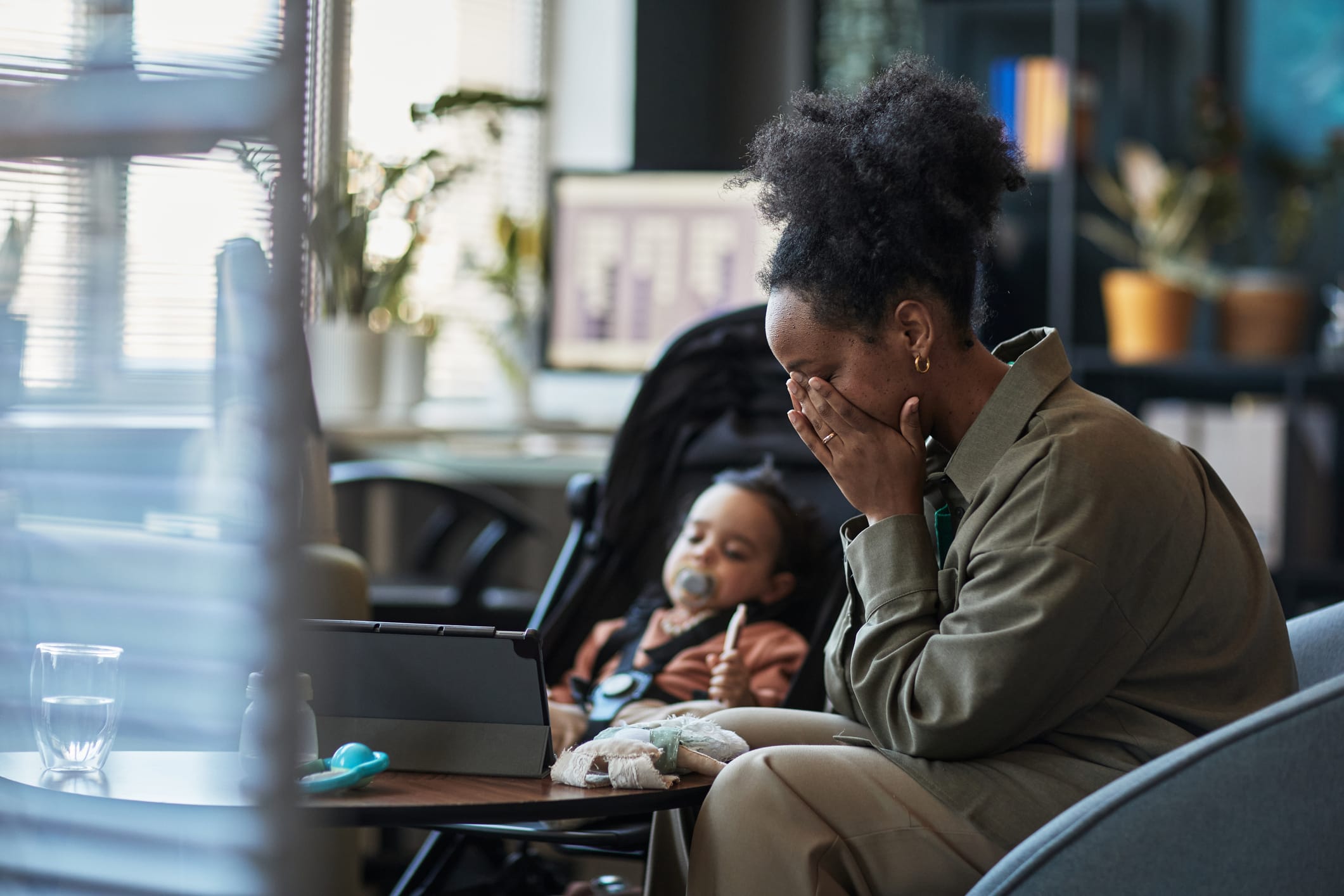
Many people describe life as a glass half empty or half full. But when you are raising a child with a rare disease, the glass feels shattered. Yet somehow it still fills, the level rising to produce an uncommon, powerful overflow. Cracked on all sides and held together under constant internal and external pressure, it survives by something almost supernatural. Internally, there are expectations of what life is supposed to look like: dreams of normalcy, independence and blending into society. Externally, there is uncertainty, life-altering experiences, and fluctuating levels of support that test every ounce of strength you have.
I am a single mum to four boys. My youngest, Jeremiah, lives with a rare, progressive mitochondrial disease called thymidine kinase 2 deficiency (TK2d). As his primary caregiver, my life changed completely the moment his diagnosis was confirmed.
TK2d affects Jeremiah’s ability to move, eat and breathe. Although there is now an approved historic treatment (Kygevvi), his care still requires an extensive medical team that includes specialists across nearly every discipline.
Jeremiah was diagnosed through genetic testing as an infant after months of appearing “floppy” with low muscle tone. At the time, his former pediatrician, unaware of TK2d, dismissed these concerns as laziness. Unfortunately, misdiagnosis is common with rare diseases, and many families never receive answers at all. It was an anger that birthed advocacy with grace.
With no medical background, limited support as a legal immigrant and very little information available online, I was overwhelmed when Jeremiah was finally given a diagnosis. Fear and grief threatened to consume me, but those emotions eventually became fuel. Unsure how long I would be able to see my son’s bright eyes or feel his joyful body wiggles, I joined every support group I could find and committed myself to advocacy and education about TK2d. We become frequent flyers at the children’s hospital.
Jeremiah was given three months to live in 2019. This Jan. 23, 2026, he turned seven years old and is thriving.
Jeremiah’s daily life is shared through a social media vlog followed by about 300,000 people worldwide on platforms such as Facebook, Instagram, YouTube and TikTok. Through it, we raise awareness by sharing both the beauty and hardship of this rare journey.
Jeremiah uses a ventilator to breathe, receives nutrition through a G-tube, navigates life in a motorized wheelchair and is learning to communicate through an eye-gaze device. He relies on me for all aspects of his care and to help keep him alive.
I went from being a business professional to changing diapers every hour and napping on the couch so I could be near him. I ditched my heels and career for sweats and strained finances (through micromanaged social security). I went from rushing to work meetings to making sure he gets to his daily therapies and medical appointments even if it requires us flying across the country loaded down with equipment and medical necessities.
My time is no longer mine, isolation is common, yet I push myself to give him a good quality life and volunteer to raise awareness. I gave up solo trips in the blue skies to watching him turn blue with fear in my eyes, from mixing drinks to mixing medications, from living my best life, to keeping my medically complex child alive. I’ve missed countless parental activities with my older boys because my youngest needs me to eat, move and breathe. What was deemed a death diagnosis has affected every aspect of our family life. The overwhelming emotions stifled in the first few years gave me eerie adrenaline racing against time without a stopwatch, yet the clock has kept ticking.
Last year I turned 40. I thought I was feeling depressed over the holidays, and then it hit me: I no longer recognized myself in the mirror. I broke and started depression medication to help the overflow of tears that I experience often.
Perhaps the untimely overflow from my shattered glass isn’t meant to break me. For those of us raising children with rare diseases, maybe it’s meant to show us the power of community around us and even our own strength that we are unaware of.
Even in the physical and mental sense of breaking, the pieces still are held together by medical professionals, researchers and people who follow our journey filled with faith, and our own unconventional hope. Along our journey I was blessed to connect with UCB, a global leader in rare disease pharmaceuticals, and United Mitochondrial Disease Foundation (UMDF), the leading support organization for mitochondrial disease. It felt good to not be alone as they genuinely care about the patient voice. Their support has helped keep me together, even when I’m not sure how I haven’t fallen apart.
Please don’t mistake my grief for a lack of gratitude. I didn’t expect my son to live this long; now I feel like I’m finally pausing to reflect in a state of stuck shock.
I have to logically and rationally figure out how to continue providing financially, physically and even emotionally for Jeremiah’s ever-growing needs, to care for his entire being and maturing emotions. I have to figure out how to morph into a stronger version of myself to endure the unpredictable journey ahead.
The clock doesn’t stop, but what we do with our time matters: we either rise up or not. Although broken, the opportunity to use my glass’s overflow for good shows that we can all rise to rare. The unknown overflow keeps me together, by choice for the love of my son, my own servitude heart to mankind, and towards hope for future generations so that others won’t have to break like me.
Sign up here to get the latest news, perspectives, and information about TK2d sent directly to your inbox. Registration is free and only takes a minute.
