
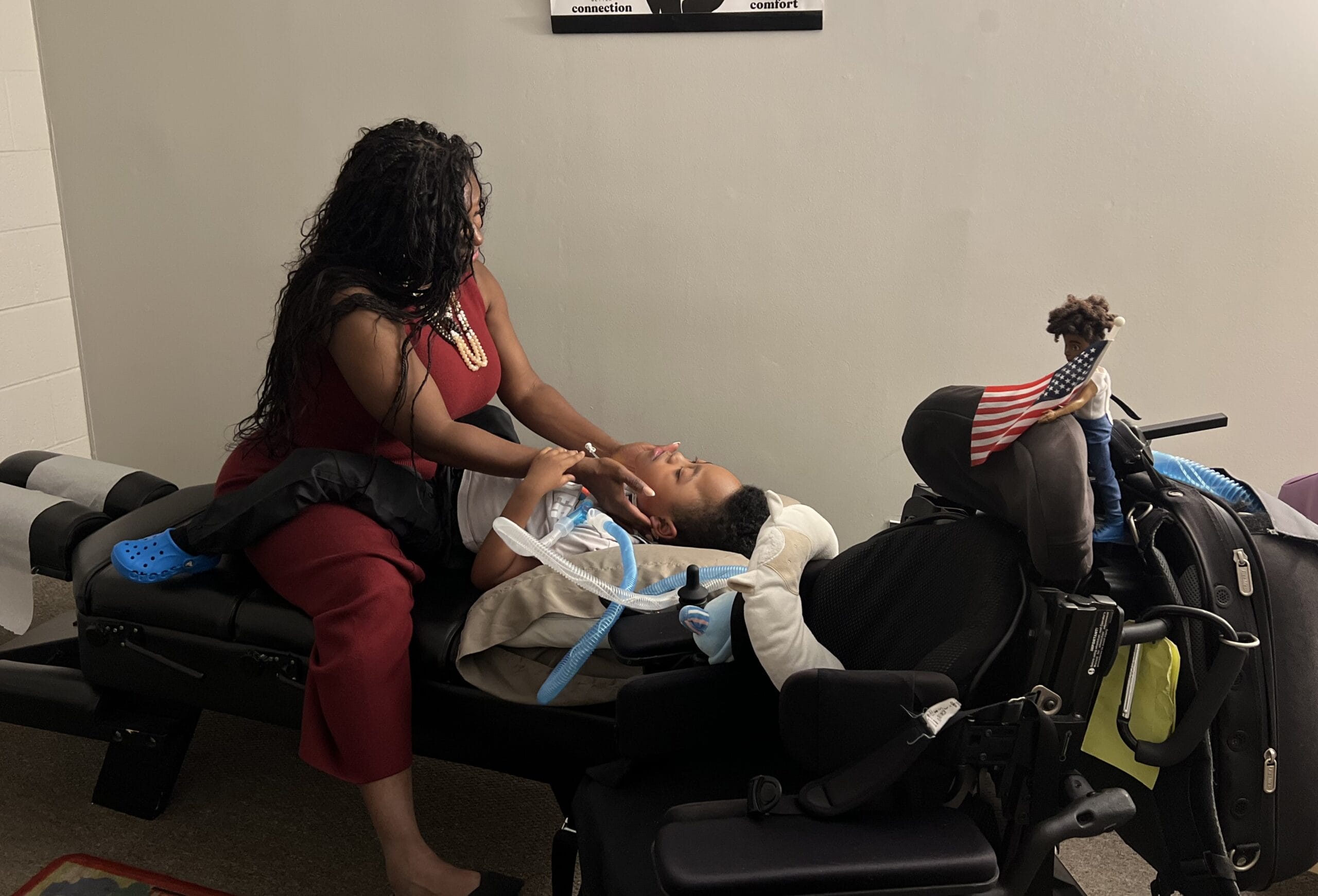
Parenting a child with thymidine kinase 2 deficiency (TK2d) means learning to navigate a world with very few guidebooks. When my son was diagnosed, we quickly realized that most families facing this rare mitochondrial disorder are often learning in real time, balancing traditional medical care with supportive therapies to discover what helps our children thrive. Recently, the Food and Drug Administration (FDA) approved Kygevvi, the first treatment for TK2d, but for a devastating disease such as this, you still need varied types of therapy and comprehensive care. One essential part of our life has become weekly chiropractic care.
Chiropractic care is not a cure for TK2d, and it should never replace the expertise of neurologists, genetic specialists or other subspecialists. But for our family, it has become a supportive therapy that helps address some of the everyday physical challenges that come with a disease that affects muscle strength, endurance and mobility. For my son Jeremiah, chiropractic care doesn’t only help decrease the tightness in his muscles: it also helps with rest, regularity of bowel movements and more.
Building alignment and mobility
Children living with TK2d experience muscle weakness that can influence posture, balance and overall movement. As kids develop, these challenges can become more noticeable. I’ve watched Jeremiah’s growth challenge his body’s ability to adjust. In physical therapy I take note when he has problems shifting his weight on a ball, or when he struggles with head control after a growth spurt.
When muscles fatigue easily, the body sometimes compensates by shifting posture or placing extra stress on certain joints or areas of the spine. Over time, that can lead to discomfort, stiffness and pain. In my son’s case, his hips have some subluxation, and his spine has a small curve. He also cannot stretch his legs out fully due to his degrees of contracture.
Chiropractic care focuses on the musculoskeletal system: how the spine, joints and muscles work together. For a growing child with TK2d, maintaining good alignment and joint mobility is very important. Gentle chiropractic adjustments help reduce stress on the body and support more comfortable movement during everyday activities.
One of the things we have learned is that small improvements in comfort can make a meaningful difference for Jeremiah. When children with neuromuscular conditions experience less tension or stiffness, it can help them conserve energy for the things that matter most such as learning, playing and simply being kids.
Another potential benefit is improved mobility and flexibility. Muscle weakness can sometimes cause joints to feel stiff or restricted. Chiropractors trained in pediatric care often use gentle techniques designed specifically for children. These techniques aim to keep joints moving properly and support better range of motion. For a child who is still growing and developing, maintaining flexibility can help with sitting balance, reaching and daily movement.
More benefits for the body and mind
Chiropractic care also emphasizes the relationship between the spine and the nervous system. The spine protects the spinal cord, which carries signals between the brain and muscles. While research in this area continues to evolve, I am a firm believer that maintaining spinal alignment can help support better communication between the brain and body. For children with conditions that affect muscle performance, optimizing how the body functions overall can be undeniably valuable.
For our family, quality of life is one of the most important goals. Managing medical appointments, therapies and the numerous roles we have to maintain in our everyday life can be overwhelming. I am sure Jeremiah can feel some of the stress associated with it. Supportive care options that focus on comfort and body awareness can help children feel more relaxed and supported in their own bodies over time.
Of course, chiropractic care should always be approached thoughtfully to ensure that care remains safe and coordinated. It is important to work with a chiropractor who has experience with pediatric patients and understands the unique needs of children with neuromuscular conditions. Jeremiah has been blessed to work with the same chiropractor since birth; she knows his body quite well, and walks this journey with us. After a good adjustment to help re-align his body, Jeremiah is always visibly relaxed.
Because TK2d is so rare, there is still much to learn about how children grow and adapt with this condition. For our family, chiropractic care has become one small piece of a larger support system focused on helping Jeremiah live as fully and comfortably as possible, contributing to a good quality of life. And for that we are thankful.
Sign up here to get the latest news, perspectives, and information about TK2d sent directly to your inbox. Registration is free and only takes a minute.
