
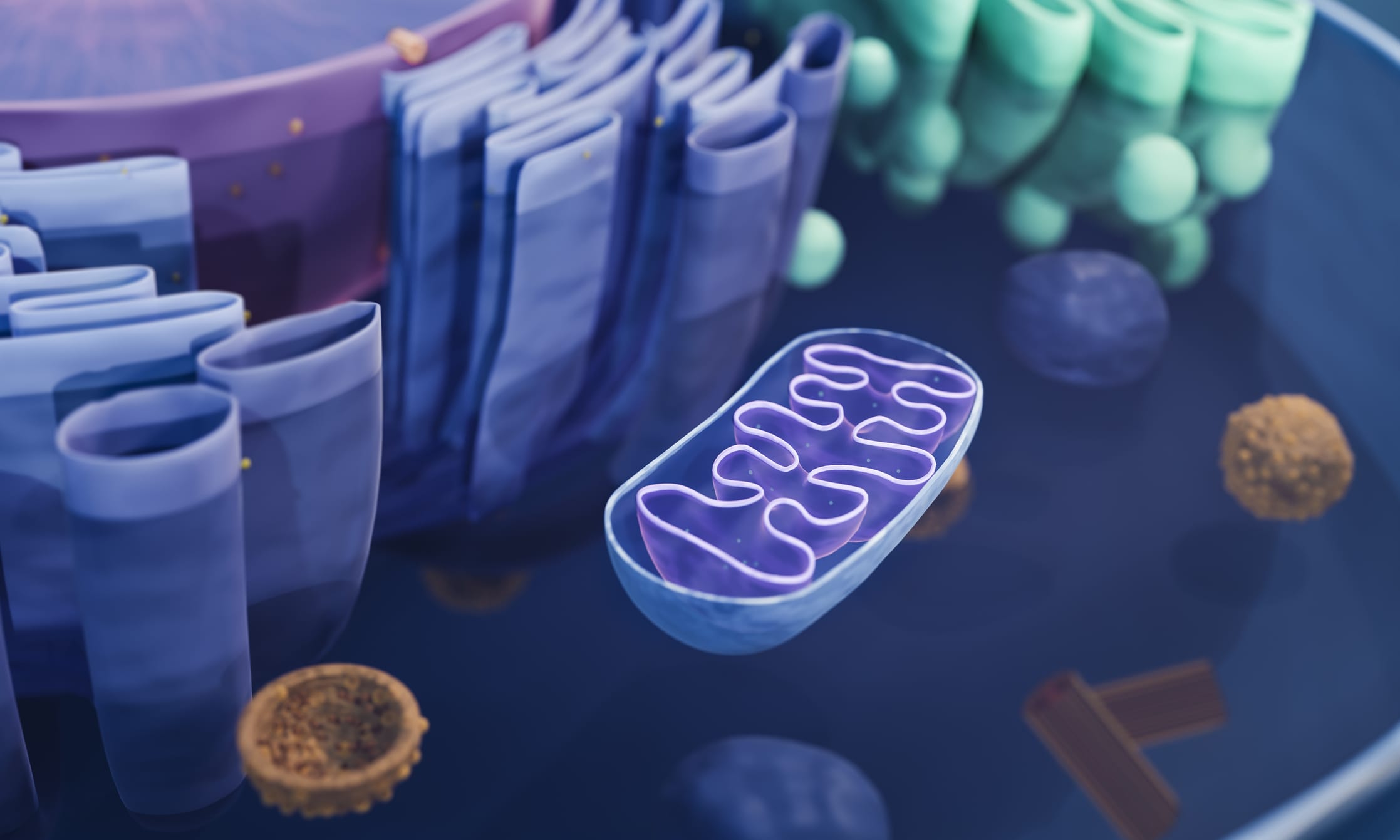
The mitochondria are a vital component of cells that are needed to generate energy for the body. In patients with thymidine kinase 2 deficiency (TK2d), the mitochondria become damaged, causing loss of motor skills.
The basics of mitochondria
Mitochondria are cellular structures found in the fluid that surrounds a cell’s nucleus. The mitochondria are colloquially known as the “powerhouses” of the cells. They play a vital role in the process of cellular respiration, which produces chemical energy in the form of adenosine triphosphate (ATP).
Whenever your body needs energy, it taps into these chemical stores by breaking down ATP, using the released energy to power cells. The body uses an enormous amount of ATP each day. According to some estimates, the average human uses upwards of 9 ✕ 1025 — that is, 9 followed by 25 zeros — molecules of ATP daily.
Where are mitochondria located?
The mitochondria can be found in cells throughout the body. In fact, a single cell can contain hundreds or even thousands of mitochondria.
Some parts of the body may use more mitochondria than others, including the muscles, liver, kidneys and brain.
What is mitochondrial disease?
“Mitochondrial disease” is an umbrella term for a group of many diseases that lead to altered mitochondrial function. While all mitochondrial conditions are genetic, they each have unique causes and disease processes.
These diseases can impact nearly every organ system, but symptoms may vary depending on how severely the mitochondria are impacted. In certain cases of mitochondrial disease, for example, people may still have some healthy mitochondria.
Mitochondrial vs. nuclear DNA
Alongside the DNA present in each cell, which is known as nuclear DNA, the mitochondria contain DNA of their own. Human mitochondrial DNA, which is inherited from the mother, consists of 37 genes that code for proteins needed for normal function.
Just like nuclear DNA, mitochondrial DNA needs to undergo replication and maintenance to make sure all the cells have the instructions needed for the mitochondria to work properly.
Read more about TK2d causes and risk factors
How does TK2d affect the mitochondria?
TK2d is caused by mutations in the TK2 gene. Although this gene is found in the nuclear DNA, it codes for a protein that functions within the mitochondria. TK2 is an enzyme that helps produce the building blocks needed to create mitochondrial DNA.
Individuals with TK2d produce dysfunctional TK2 enzyme, which interferes with the replication and repair of mitochondrial DNA. As a result, mitochondrial DNA depletes with time and the encoded proteins cannot be produced efficiently. This leads to the symptoms associated with TK2d, namely:
- Weakness in the arms and legs.
- Trouble chewing and swallowing.
- Trouble moving the muscles of the face, including the eyes.
- Respiratory difficulties.
- Cardiac complications.
Sign up here to get the latest news, perspectives, and information about TK2d sent directly to your inbox. Registration is free and only takes a minute.
