
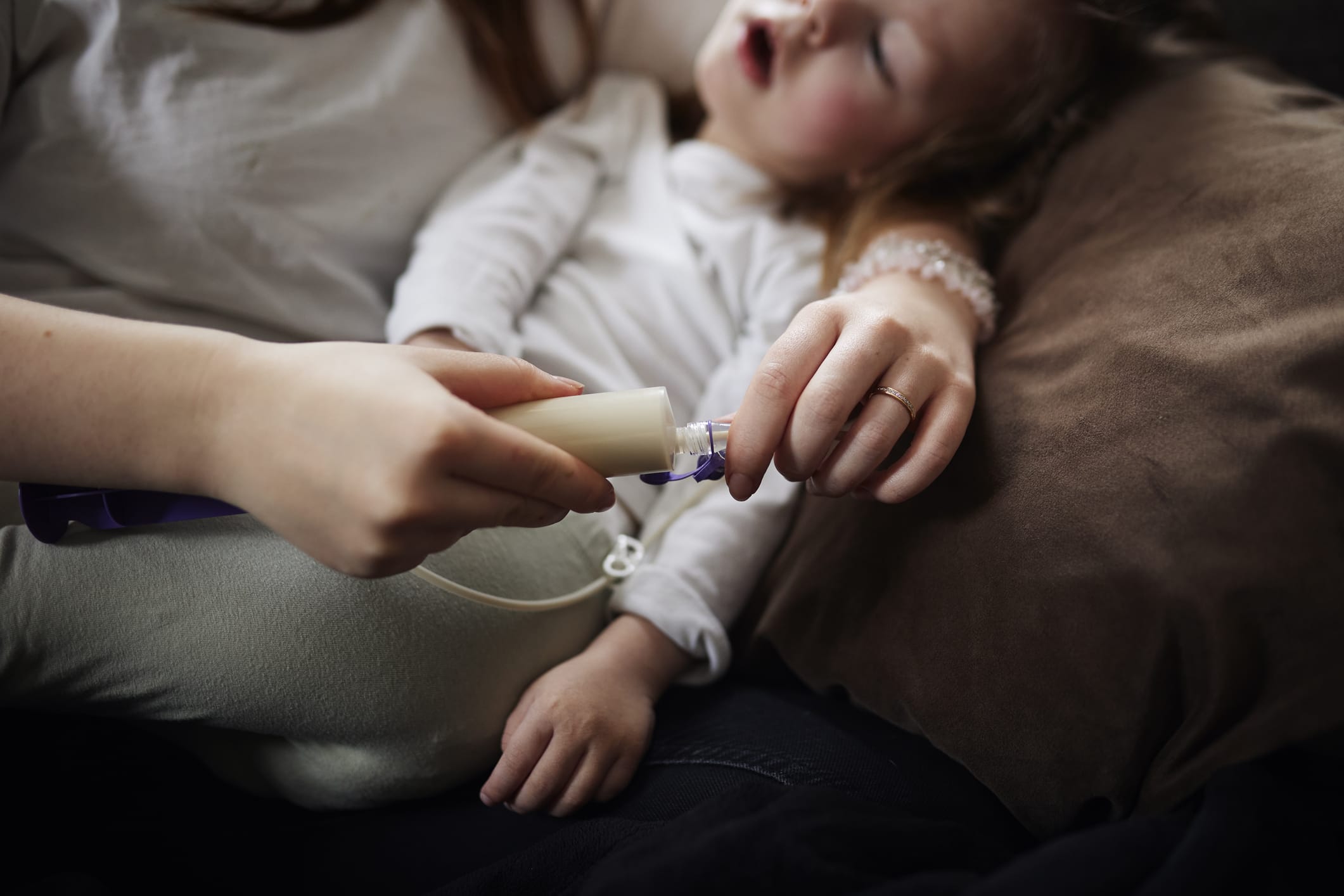
Thymidine kinase 2 deficiency (TK2d) progressively weakens the breathing, eating and swallowing muscles. As these muscles become less effective, the risk of choking or aspirating food increases. A feeding tube that delivers nutrition, medication and fluids directly to the stomach or small intestine offers a safe and practical solution to these challenges.
Initial adjustment and acceptance
The placement of a feeding tube can be confronting — a sign that the disease is progressing and quality of life continues to be impacted. It can be overwhelming to imagine no longer physically eating every meal and feeling a loss of independence.
However, in many cases, patients and families quickly realize that a feeding tube also brings relief. Once a gastrostomy tube is in place, it reduces the stress associated with difficult eating and swallowing and provides easy access for nutrition, liquid and medication.
As a result, patients feel less anxiety around meals, get adequate nutrition and have more energy. Their overall health and wellbeing are often improved. It is helpful to recognize these real benefits — not just the losses.
Remember that eating is not totally ruled out, either. Small bites at family meals and favorite sweet treats are still possible.
Learn more about TK2d treatment and care
Maintaining a feeding tube
Though a nasogastric tube is often what comes to mind at the mention of a feeding tube, a gastrostomy tube (G-tube) that enters through the abdominal wall is more common in TK2d. A nasogastric tube is a short-term option that is less comfortable and easier to dislodge when coughing or vomiting. In comparison, G-tubes are more practical and discreet.
In both cases the tube needs to be kept clean, by rinsing with water before and after feeds or medication administration. Always wash your hands before handling the tube or formula to help prevent infection.
A nasogastric tube is held in place with an adhesive dressing, which requires changing every few days. If the tube moves dramatically or becomes dislodged, inform your healthcare team right away. The area around the G-tube must be cleaned with mild soap and water and patted dry.
Any redness, swelling, discharge or discomfort should be immediately reported to your healthcare team.
Managing feeding schedules
Your dietitian will define a personalized feeding schedule to ensure you or your child receives the right amount of calories, vitamins and minerals. You will then be shown how to manage the machine that administers the formula and the steps to follow — how to connect the formula, adjust the feeding speed, flush clean the tube and troubleshoot any potential issues.
When nutrition or medication is being administered, it is important to sit upright, or at least keep your head elevated to help avoid reflux, nausea or aspiration.
Since it takes longer for food to move through the digestive track in people with TK2d, patients often don’t feel hungry. If planning to eat by mouth, it can help to time G-tube feedings for nighttime to increase appetite during the day.
Sign up here to get the latest news, perspectives, and information about TK2d sent directly to your inbox. Registration is free and only takes a minute.
