
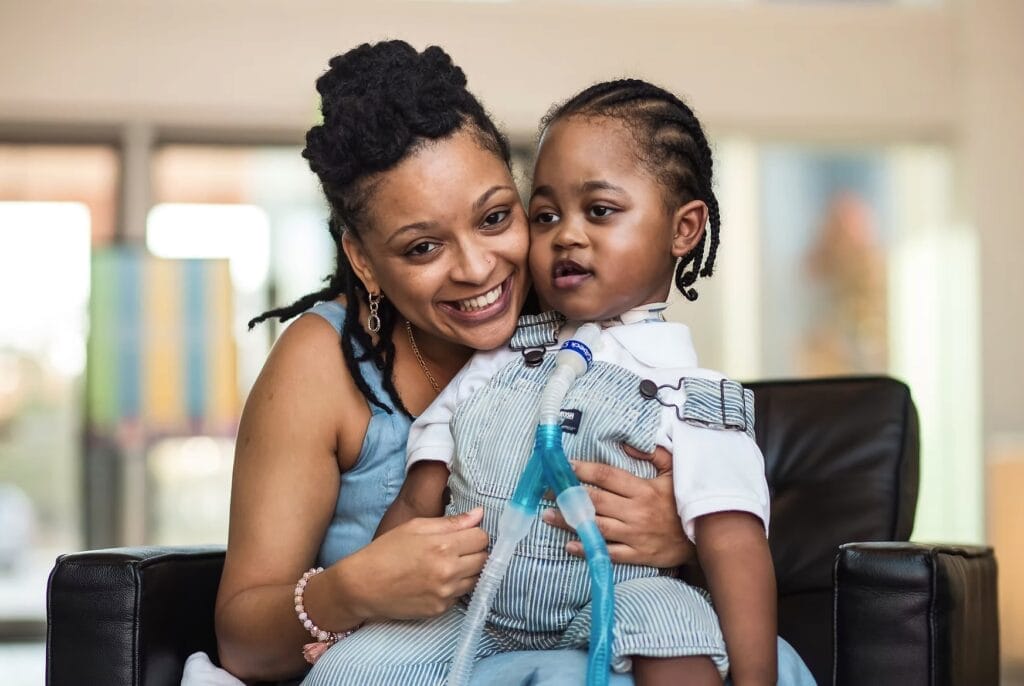
Jeremiah Gracen is a rather famous little boy with an extremely rare and life-threatening disease.
The 6-year-old, who lives in Florence, South Carolina, has tens of thousands of online followers thanks to his mother, Aneesa Gracen. She chronicles Jeremiah’s battle with thymidine kinase 2 deficiency (TK2d) via regular updates on Facebook, Instagram, YouTube and TikTok, and through the nonprofit she started, The Jeremiah Gracen TK2d Foundation.
As a newborn, Jeremiah showed no immediate signs of sickness, said his mother, who has three older sons: J’aiden, 19; Josiahs, 16; and Jamari, 15.
“Jeremiah was normal until he was about 5 months old,” she said. “At that point, he started getting very weak and couldn’t lift his head. A therapist said there was definitely something wrong, but the doctor said he was just being lazy.”
As Jeremiah continued to weaken, his mom grew ever more determined to get answers.
“One morning, I went online and began emailing every genetic testing place in South Carolina. We eventually did a telehealth assessment with Greenwood Genetic Center, then blood samples to get sequencing done,” she said. “On Sept. 16, 2019, we got the diagnosis: TK2d.”
Just over 100 people worldwide are known to be living with TK2d, a mitochondrial disease discovered 25 years ago in Israel. Patients who present before turning 2 years old survive an average of one year. Those whose symptoms start between 2 and 12 years of age have a median survival of 13 years, while people whose disease appears after age 12 generally live another 23 years.
The long road to a diagnosis
Gracen then “started Googling like crazy, searching for and joining every TK2d parent support group I could find,” she said. “I found another parent, Arthur Estopinan, on Facebook and stalked him online just so I could get in touch with him. Through Art, I found Dr. Hirano in New York.”
That would be Michio Hirano, MD, with Columbia University Irving Medical Center in New York, New York.
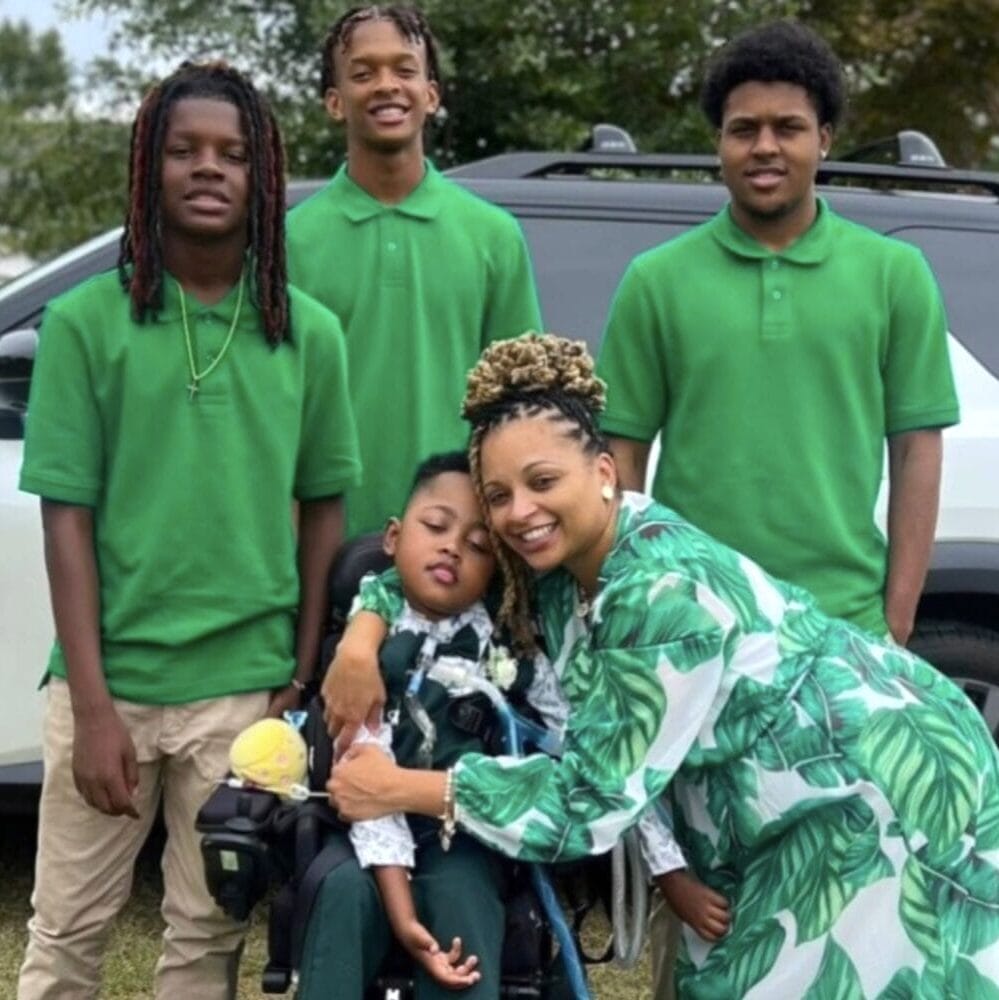
At that time, Jeremiah was the youngest child to be confirmed to have a TK2d mutation. Dr. Hirano managed to place him in a clinical trial for deoxynucleoside therapy, which consists of doxecitine and doxribtimine.
The drug, now marketed in powder form as Kygevvi™ by Belgian pharmaceutical giant UCB, won U.S. Food & Drug Administration approval on Nov. 3, 2025, for adults and children whose TK2d symptoms began at 12 years old or earlier.
Sarah Chang, PhD, UCB’s medical strategy lead, said the true global prevalence of TK2d is believed to be between 350 and 400 patients. She estimated that the early-onset form of TK2d, which is the more severe and rapidly progressing form, accounts for 80% of all known cases.
Among the organizations Gracen works closely with is the United Mitochondrial Disease Foundation (UMDF), headquartered in Pittsburgh, Pennsylvania. “We have 5 people who either have TK2d or are caregivers serving as support ambassadors,” said Margaret Moore, the foundation’s associate director of support and education.
Especially for late-onset patients, TK2d can take five to eight years to diagnose, Moore said.
“The burden is finding the right doctor,” she said. “Sometimes people are lucky and they’ll be diagnosed as a younger child. But many do not have access to genetic testing.”
The TK2d families Moore knows make up “a very tight-knit community,” using tools like WhatsApp to stay in communication and give support.
Educating people with TK2d and their families

The Jeremiah Gracen foundation has over 225,000 likes on its Facebook page and, among other things, has produced a child- and adult-friendly paperback book titled Tell Me, Teach Me, Is it TK2D? It also has partnered with UCB, UMDF, MitoAction and others to produce educational content and brochures for patients and their families, as well as medical professionals.
Gracen sees her mission as “turning a death sentence into a lifeline of hope” for her child and for the many others whose lives may be touched by the disease.
As difficult as it is taking care of Jeremiah, Gracen said her son is gradually improving with the use of deoxynucleoside therapy.
“It’s not like a magic pill,” she said. “He didn’t get better or stronger at first, but now he can do 1 to 2 hours off the ventilator. After 3 years of silence, he can now make sounds. Intellectually, I think he has delays, but he uses his eyes to communicate.
“He hates schoolwork, but he’s sharp with his wheelchair skills.”